The Tigard, OR Housing Market: Trends, Prices, and Tips for 2026


Tigard · Community Photo
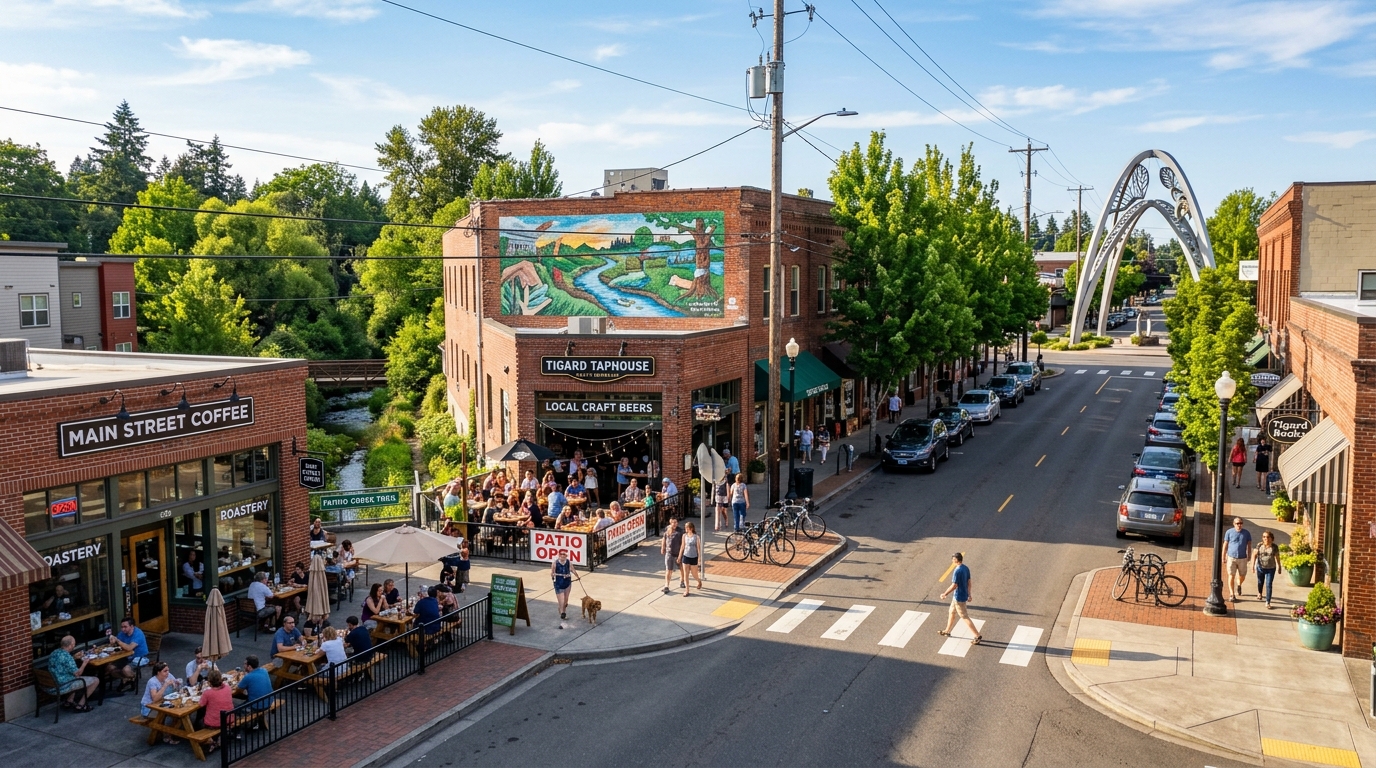
Tigard is one of the Portland metro's most strategically located suburban communities. Sitting at the confluence of Highway 217 and I-5, Tigard provides unmatched connectivity to Portland, Beaverton, Lake Oswego, and Tualatin. Its growing restaurant scene, well-regarded schools, diverse housing stock, and strong retail base make it a practical and genuinely appealing choice for buyers across a wide range of budgets.
Redfin data shows a median home price of approximately $587,000 in Tigard in December 2025. The combined Tigard-Tualatin-Wilsonville corridor averaged $649,300 through 2025 — a figure that reflects continued stability and market normalization after several years of significant price volatility. Tigard remains at a moderate premium above the Oregon statewide median of approximately $497,000.
Local experts tracking the Tigard market describe 2025 as a year of balance and strategy — a market that has moved away from pandemic-era frenzy toward a more measured environment that rewards preparation over urgency. Gradual improvements in affordability are expected in 2026 as interest rates potentially ease, and the market is expected to build on 2025's stable foundation.
Supply vs. Demand in the Tigard, OR Housing Market
Tigard's inventory has improved modestly compared to the tightest years, giving buyers meaningful choices. Oregon's statewide inventory rose 6.7% year-over-year in early 2026. However, the number of available homes in Tigard remains below historical norms for a fully balanced market, maintaining some seller advantage in the most desirable price ranges.
Demand in Tigard is driven by its exceptional location — within 20 minutes of downtown Portland, Lake Oswego, Beaverton's tech corridor, and Tualatin's industrial hub. The city attracts first-time buyers, families upgrading from smaller Portland homes, and value-oriented buyers who want Lake Oswego-level access without Lake Oswego-level pricing.
Like the rest of the Portland metro, Tigard's resale inventory is constrained by the lock-in effect. Homeowners who purchased at 3% mortgage rates have limited financial incentive to sell and move at today's rates, which are near 6.5% to 7%. This keeps the number of available homes below what buyer demand would otherwise require, maintaining price support.
Average Days on Market and Pricing Trends in Tigard, OR
Homes in Tigard are spending an average of 66 to 74 days on the market, up from 56 days the prior year. This modest increase reflects buyers having more options and taking more time to evaluate — a healthy development compared to the extreme pace of 2021 and 2022. Well-priced, move-in-ready homes in Tigard's most desirable neighborhoods still move meaningfully faster than the overall average.
Homes in Tigard sell at approximately 98% to 99% of the asking price. The median price per square foot in the Tigard-Tualatin corridor averaged $649,300 through 2025, with modest appreciation expected in 2026. Buyers are more selective about condition and pricing, and homes that present well and are priced accurately are consistently outperforming those that do not.
Tips for Buyers and Sellers in Tigard, OR
For Buyers
- Get Pre-Approved First. Tigard offers strong value relative to Lake Oswego and West Linn for buyers who prioritize connectivity and practical suburban living. Get pre-approved, identify your target neighborhoods, and work with a local agent who specializes in Tigard. The most competitive price range is $450,000 to $650,000 — be financially ready to act in that segment.
- Know Your Priorities. Tigard's market conditions vary significantly by neighborhood and school zone. Areas near Washington Square, certain elementary school boundaries, and newly improved sections of the city command premiums. A Tigard-specific agent can help you navigate these nuances and avoid overpaying in one area when better value exists nearby.
- Work with a Local Expert. Spring (March through May) brings Tigard's strongest buyer activity, driven by families timing moves around school enrollment calendars. Plan to be financially prepared and actively searching by late February.
For Sellers
- Price Accurately from Day One. Tigard buyers in 2026 are value-conscious and comparison-shop carefully across the Washington County corridor. Price your home based on recently sold comparable properties — condition, location, and school zone all significantly affect value. Starting at the right price generates momentum; starting too high erodes it.
- Prepare Your Home. With interest rates elevated, buyers in 2026 are less willing to take on homes that need work. Address deferred maintenance, refresh the interior with fresh paint and updated fixtures, and ensure strong curb appeal before listing.
- Time Your Listing Well. Spring is Tigard's strongest selling season. Listing by late February or early March ensures your home captures the first surge of spring buyers, who tend to be the most motivated and pre-qualified.
Frequently Asked Questions
Is the Tigard OR housing market competitive? Homes in Tigard, OR, are spending an average of 66–74 days on the market. Conditions vary by price range — work with a local agent for the most current neighborhood-level data.
Are home prices rising in Tigard, OR? The median home price in Tigard, OR, is currently around $587,000–$649,000 (market normalizing after 2024–2025 adjustment). Modest appreciation is projected through 2026.
Contact & Stay Connected
Stay up to date on the latest market trends with Discover Tigard.
Thinking of buying or selling? Contact Lucas Ugarte (Evoke Property Partners) for expert guidance. https://discovertigard.info/